
Mobility Work for Desk Workers: Undoing the Chair
The office chair is the most-used piece of fitness equipment in modern life — eight or more hours a day of hip flexors shortened, glutes switched off, upper back rounded toward a screen. Then the same body is asked to squat, run, or press on the weekend, and it files complaints. Mobility work is the daily maintenance that keeps a desk body trainable.
This is not about becoming flexible for its own sake. It is about fifteen focused minutes that return the ranges the chair borrows — so that training movements stay available and the lower back stops doing everyone else's job.
A note first: the routine below suits generally healthy adults. If you live with an existing back, hip, or shoulder condition, or any movement here causes pain rather than gentle stretch, a doctor or physiotherapist should shape your version of it.
What the Chair Actually Does
Three adaptations matter most. The hips: seated for hours, the hip flexors spend the day shortened and gradually surrender their full extension — which the lower back then replaces during walking, running, and lifting. The thoracic spine: the mid-back stiffens into its forward curve, and the neck and lower back overwork to compensate. The shoulders: arms forward on a keyboard all day rolls the shoulders in, tightening the chest and weakening the upper back.
The result is a body that has quietly renegotiated its ranges. Squats get shallow, overhead positions pinch, and "tight hamstrings" appear — which are usually hips and back presenting their bill. None of this is damage yet; it is positioning debt, and positioning debt responds quickly to daily payments.
The Daily Fifteen: Hips First
Open with the hip flexors, the chair's main hostage. A half-kneeling hip flexor stretch — one knee down, pelvis gently tucked, torso tall — held for about thirty to forty-five seconds per side, done daily, restores extension within a few weeks. Follow with ninety-ninety hip rotations: seated or on the floor with both knees bent at right angles, slowly rolling the knees side to side for ten controlled passes.
Finish the hip block with glute bridges, two sets of ten to twelve with a two-second squeeze at the top. Stretching alone opens range; bridging teaches the glutes to actually live in it — the pair together is what changes how you stand and walk.
Mid-Back and Shoulders: Unrounding the Top Half
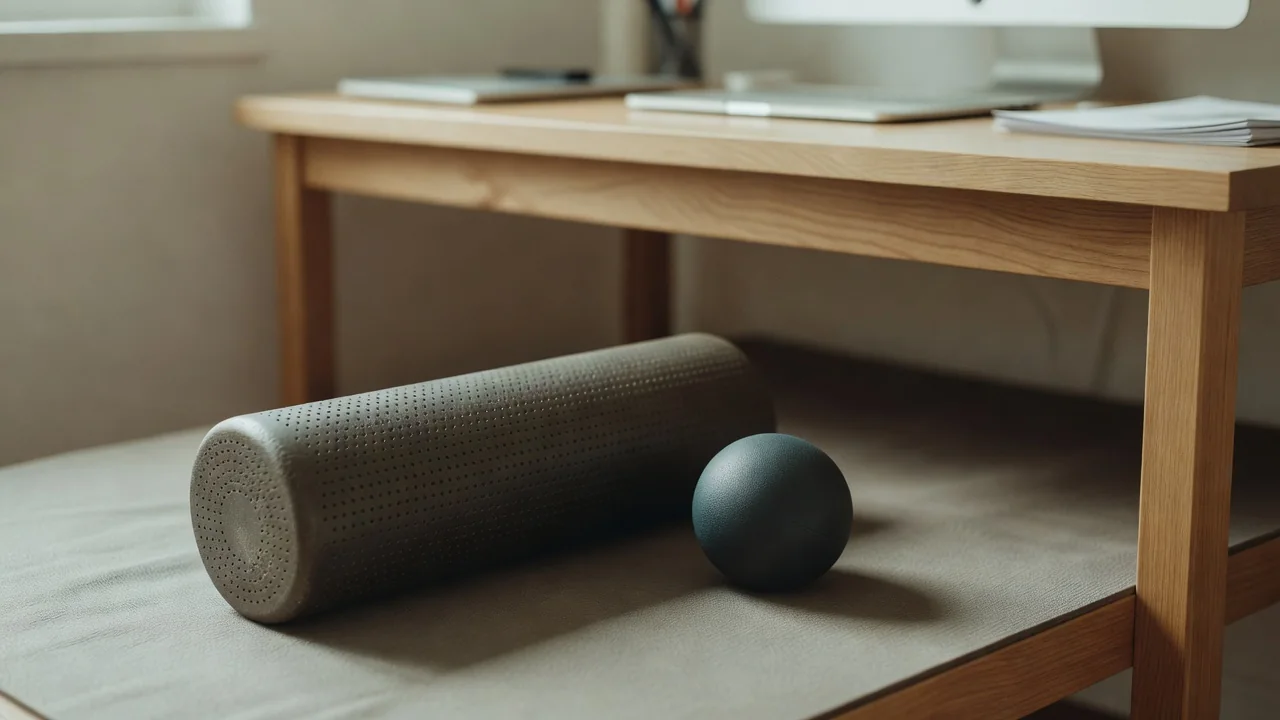
The thoracic spine wants rotation and extension, two motions the chair never offers. Open-book rotations — lying on your side, knees bent, rotating the top arm across the body and opening the chest toward the ceiling, eight to ten per side — restore the twist. For extension, hands clasped behind the head over a chair back or a foam roller, gently arching the mid-back for a few slow repetitions.
Shoulders respond to a doorway chest stretch — forearm on the frame, gentle turn away, thirty seconds per side — and to wall slides: back against the wall, arms in a goalpost shape, sliding up and down while keeping contact. Wall slides feel easy and are not; ten honest repetitions expose exactly how rounded the day was.
The Full Routine at a Glance
| Block | Movement | Dose |
|---|---|---|
| Hips | Half-kneeling hip flexor stretch | 30–45 seconds each side |
| Hips | Ninety-ninety rotations | 10 slow passes |
| Hips | Glute bridge with pause | 2 sets of 10–12 |
| Mid-back | Open-book rotations | 8–10 each side |
| Mid-back | Chair or roller extensions | 5 slow repetitions |
| Shoulders | Doorway chest stretch | 30 seconds each side |
| Shoulders | Wall slides | 10 controlled repetitions |
Order matters less than regularity. Done daily, the whole sequence fits in fifteen minutes and needs nothing but floor space and a doorway; the version done most weekdays beats the ambitious version done twice.
Micro-Breaks: The Other Half of the Fix
No fifteen-minute routine outruns nine motionless hours, which is why frequency beats intensity during the workday itself. The guideline used by many ergonomics practitioners is simple: change position every thirty to sixty minutes — stand for a call, walk to refill water, two flights of stairs. Each break is a small reset that prevents the chair from fully setting its shape.
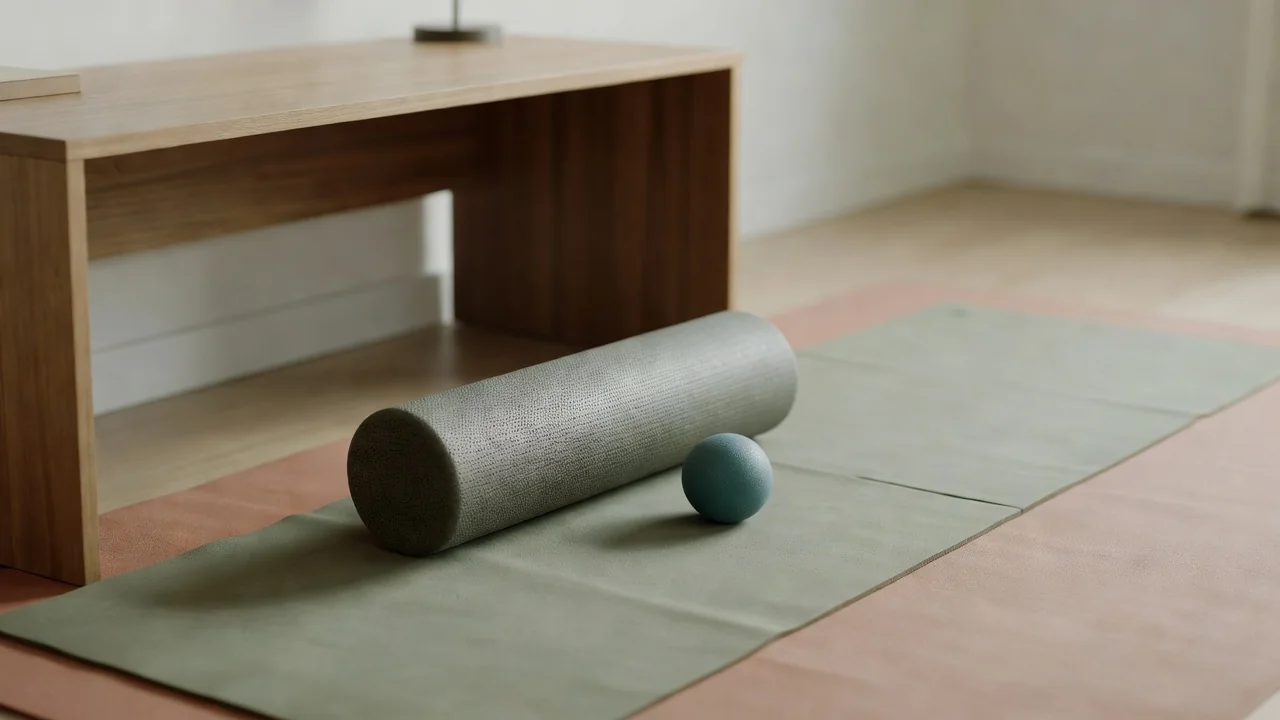
Desk-bound tools help these minutes happen: a massage ball under the foot during emails, a resistance band around the chair for a dozen pull-aparts between meetings. None of it counts as training, and all of it counts — mobility is a budget paid in small coins.
Desk Body, Training Body: How They Connect
The payoff shows up in training quality. Hip extension returns and squats deepen without forcing; the mid-back opens and overhead work stops pinching; the shoulders sit back and pressing feels centered. Warm-ups get shorter because the starting position is no longer folded.
Two cautions keep the routine honest. Stretching should feel like tension, never like joint pain — pinching and sharpness are stop signs, not effort. And if stiffness comes with numbness, radiating symptoms, or pain that persists off the mat, that is a medical conversation, not a mobility deficit; bring it to a professional. For the ordinary debt of the desk, though, fifteen daily minutes is the difference between a body that tolerates training and one that thanks you for it.