
Building a Training Habit That Sticks: The Behavioral Toolkit
Motivation gets the credit for training habits, but motivation is weather — pleasant when present, gone by Thursday. The people who train for years are not more motivated; they are better engineers. They build systems that make the session happen on the days when inspiration does not show up, which is most days.
Behavioral science has a plain frame for this: habits run on cue, routine, reward. Understand those three components and you can assemble a training habit the way you would assemble furniture — with instructions instead of hope.
Cue: Make Starting Automatic
Every habit begins with a trigger, and the strongest triggers are already welded into your day. Anchoring a session to an existing event — after morning coffee, straight from work, when the kids leave for school — beats any calendar reminder, because the cue fires itself. The decision is pre-made; you are just executing a standing order.
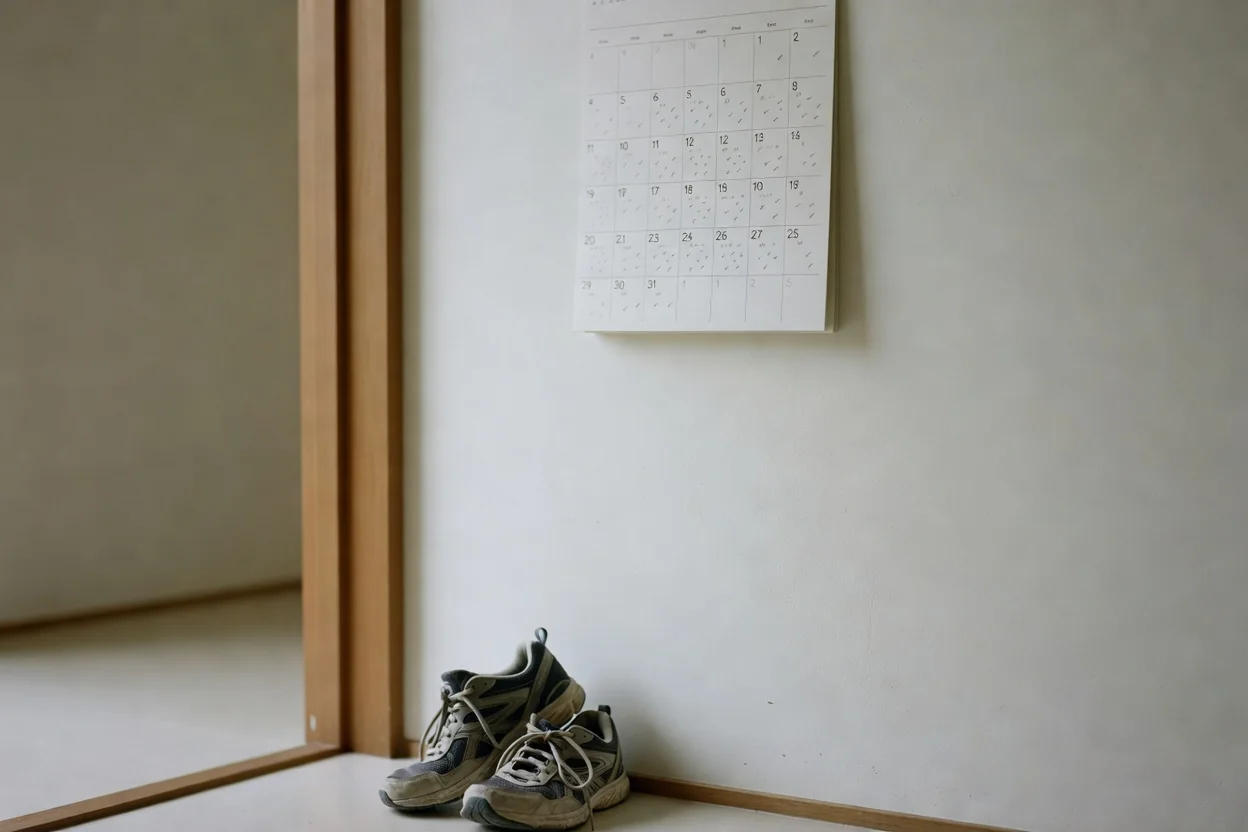
Environmental cues work the same way. The gym bag packed by the door, the mat unrolled in the corner, the shoes visible from the couch — each removes a micro-decision, and micro-decisions are where habits bleed out. The inverse is equally true: gear stored in a closet behind a suitcase is a cue to stay home.
Routine: Shrink the Session Until It Cannot Fail
The classic habit-killer is the heroic program: ninety minutes, five days a week, starting Monday. It survives until the first bad day, and bad days are guaranteed. The behavioral fix is to define the habit at its minimum viable size — fifteen or twenty minutes, three days a week — so that completing it is possible even on your worst Tuesday.
This feels like undertraining, and that feeling is the point. A small session that happens builds the identity and the groove; an ambitious session that is skipped builds nothing except evidence that you "cannot stick to things." Volume can grow after the groove exists. The first month of a habit is about repetitions of showing up, not repetitions of squats.
A useful companion rule: never miss twice. One skipped session is life; two in a row is the beginning of the old pattern. The rule converts a lapse into a trigger — the day after a miss automatically becomes a training day, however short.
Reward: Close the Loop
Habits persist when the brain registers a payoff soon after the routine. The long-term rewards of training — health, strength, appearance — arrive far too slowly to wire a habit, so the loop needs something immediate. This can be small: ticking the session off a wall calendar, the good coffee that only follows a workout, ten guilt-free minutes in the shower doing nothing.
Tracking doubles as reward. Watching a streak grow or a logbook fill creates a quiet reluctance to break the chain — and that reluctance, on a wet November evening, is worth more than any motivational speech.
The Toolkit in One Table
| Component | Tool | Example |
|---|---|---|
| Cue | Anchor to an existing event | Train straight after morning coffee |
| Cue | Environment design | Bag packed by the door the night before |
| Routine | Minimum viable session | Fifteen minutes that cannot fail |
| Routine | Never miss twice | The day after a miss is automatic |
| Reward | Immediate payoff | Calendar tick, post-session coffee ritual |
| Reward | Visible streak | Logbook or habit tracker on the wall |
Expect the Dip at Week Three
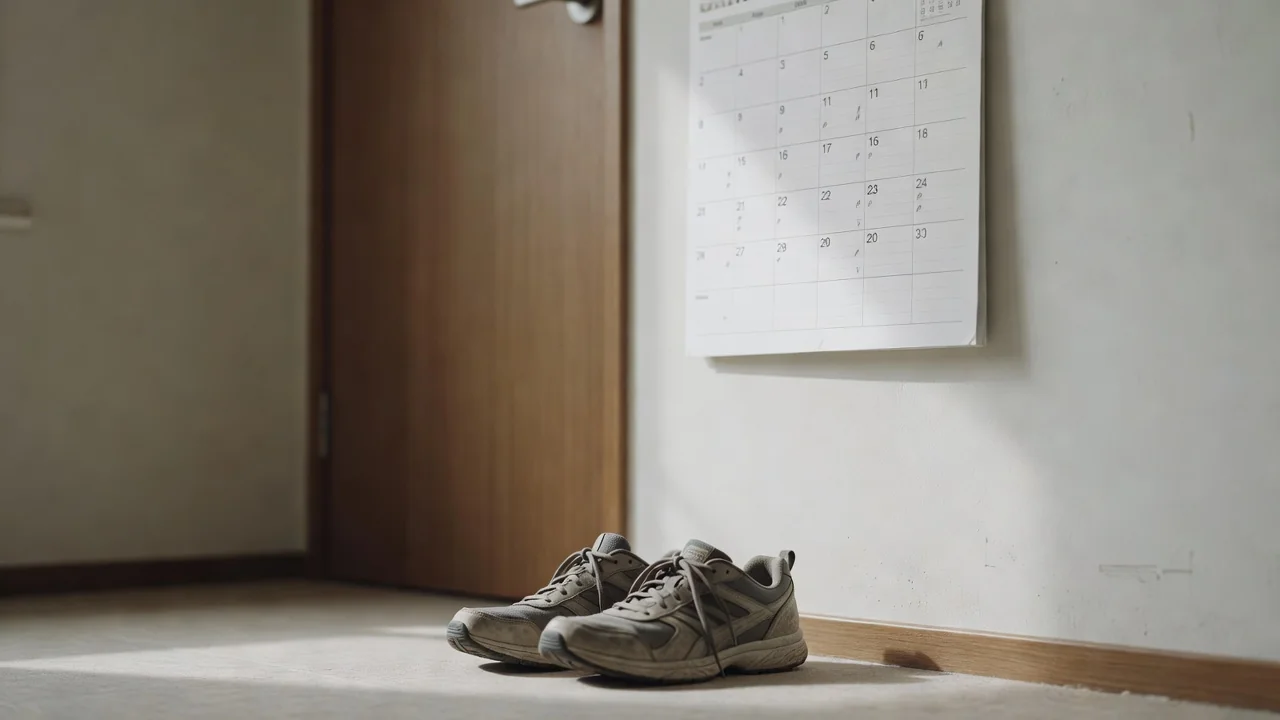
Nearly every new habit follows the same curve: enthusiasm carries week one, discipline carries week two, and week three is where the novelty is gone but the automaticity has not arrived yet. This dip is not a sign the habit is failing; it is the habit being installed. Knowing the dip is scheduled — and shrinking the session rather than skipping it — is how you get to the other side, where the behavior starts running itself.
Social gravity helps here. A training partner, a class with a fixed time, or even a friend who gets a message after each session adds an external cue that survives internal mood. Habits built in community outlast habits built in private resolve.
A Note on the Mental Side
There is a difference between normal habit friction and something heavier. If the resistance to training comes wrapped in persistent low mood, exhaustion that sleep does not fix, or anxiety that spreads beyond sport, that is not a discipline problem to engineer around — it is a health signal. Bring it to a doctor or a mental health professional rather than to a stricter program.
For ordinary friction, though, the toolkit stands: anchor the cue, shrink the routine, close the reward loop, survive week three. Systems outlast motivation — build the system once, and it trains for you.