
Protein Basics for Active Lifestyles
Protein is the one nutrition topic where gym folklore and quiet kitchen reality disagree most loudly. The folklore says shakes within thirty minutes or the workout was wasted; the reality is that total daily intake, spread across ordinary meals, decides almost everything — and that most active people can cover it with food they already buy.
Getting protein right is less about supplements than about pattern: a decent portion at each meal, a source you actually enjoy, and enough total across the week to let training do its job.
Why Active People Need More Than the Minimum
Protein provides the amino acids that repair and build tissue. Every training session creates microscopic damage in muscle fibers — that is the stimulus — and the repair of that damage is where adaptation comes from. General dietary guidelines set a floor that prevents deficiency in sedentary life; regular training raises the requirement well above that floor, because the construction work never really stops.
Protein has a second job that matters to anyone watching body weight: it is the most satiating macronutrient. Meals anchored by a real protein portion keep hunger quieter for longer than meals built on starch alone, which makes eating patterns far easier to sustain than willpower-based restraint.
How Much Is Enough
Sports nutrition practice commonly lands active people in a range of roughly 1.2 to 2.0 grams of protein per kilogram of body weight per day — the lower end for moderate recreational training, the upper end for hard strength blocks or calorie deficits where muscle retention matters. For a seventy-kilogram recreational athlete, that is the difference between "a palm-sized portion at two meals" and "a portion at every meal, plus a bit more."
More is not automatically better. Beyond the upper end, extra protein mostly displaces carbohydrates and fats that fuel training and health, and the kidneys of healthy people handle high intakes without drama — but there is simply no return on the excess. The goal is enough, every day, not a record.
Food First: Sources That Do the Job
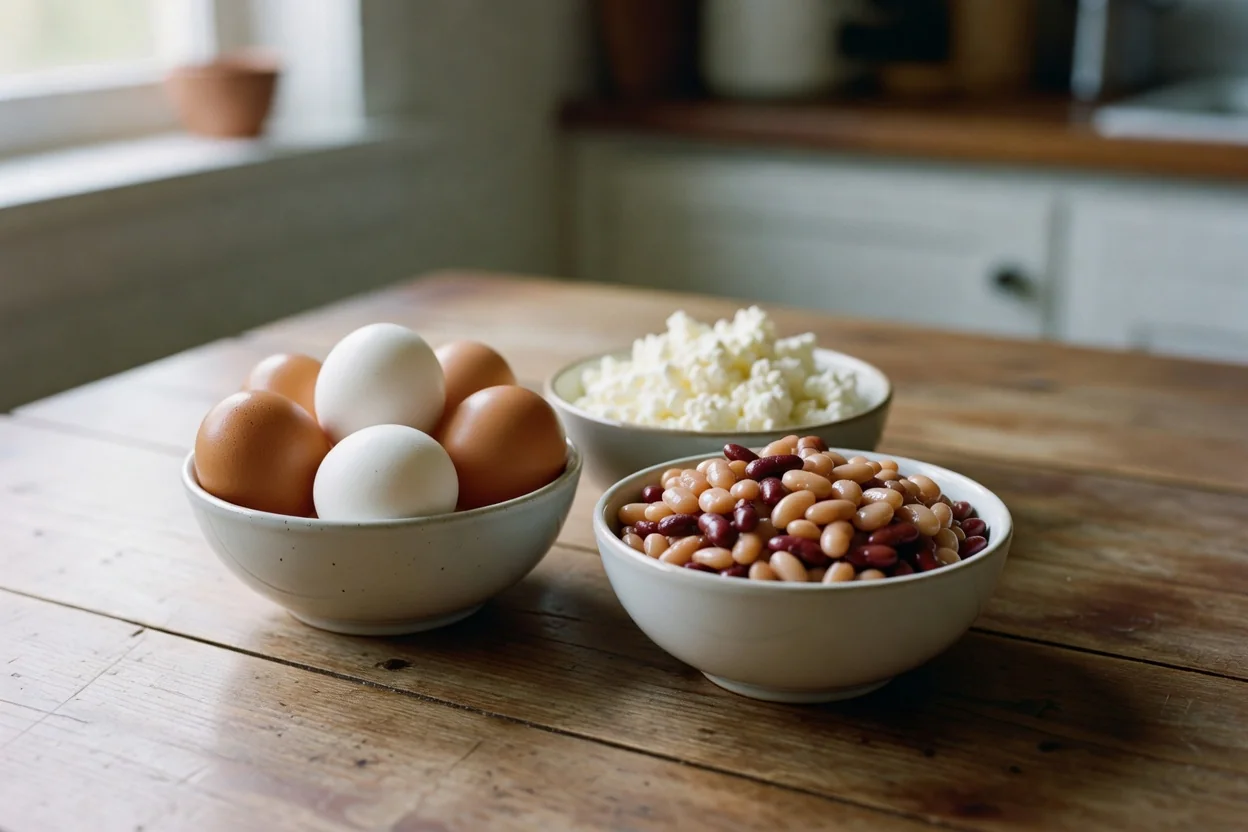
No powder is required. The everyday sources below cover complete amino acid profiles or combine to form them across the day:
- Eggs — cheap, fast, and among the most usable proteins the kitchen offers.
- Greek yogurt and cottage cheese — high protein per serving, breakfast-ready, snack-ready.
- Chicken, turkey, and lean beef — the dense staples of most training diets.
- Fish, including canned — protein plus fats that support recovery and general health.
- Lentils, beans, and chickpeas — plant staples that pair with grains to complete the profile.
- Tofu and tempeh — the reliable anchors of meat-free training diets.
Plant-based athletes need a little more planning, not a different biology: variety across the day — legumes plus grains plus soy or nuts — assembles everything the body needs without animal products.
The Timing Myth and the One Window That Matters
The famous thirty-minute "anabolic window" has been largely deflated by later research thinking: for people eating normal meals, total daily protein and its distribution across the day outweigh minute-precise timing. The practical guideline that survives: get a protein-containing meal within a couple of hours on either side of training, and do not train hard in a fully fasted state if it makes you feel weak.
Distribution is the underappreciated lever. Many people eat a token breakfast, a moderate lunch, and a huge protein dinner — a pattern that underuses the day. Spreading intake across three to four eating occasions, each with a solid protein anchor, keeps the repair supply steadier than one evening feast.
| Everyday portion | Protein, roughly | Best moment |
|---|---|---|
| Two eggs | About 12 grams | Breakfast anchor |
| A cup of Greek yogurt | 15 to 20 grams | Breakfast or snack |
| A palm of chicken breast | 25 to 30 grams | Lunch or dinner |
| A can of tuna or sardines | 20 to 25 grams | Fast lunch |
| A cup of cooked lentils | About 18 grams | Plant-based main |
| A scoop of protein powder | 20 to 25 grams | Convenience only, not required |

Where Supplements Fit — and Where They Do Not
Protein powder is food, not magic: a shelf-stable, quick-mixing protein portion for days when cooking fails. It makes sense for people who struggle to hit their target with meals, who train straight from work, or who find liquid calories easier after hard sessions. It makes no sense as a replacement for a diet that never had protein anchors in the first place.
Judge products simply: short ingredient list, protein per serving stated plainly, and a price per gram you have compared with eggs and yogurt. The rest — exotic blends, anabolic branding, proprietary matrices — is packaging, and packaging has never repaired a muscle fiber.