
Hydration Basics for Training Days
Hydration advice splits into two useless camps: those who say everyone must carry a gallon jug everywhere, and those who say thirst alone is enough. Training days sit between the extremes. Sweat changes the equation — and understanding when water suffices, when timing matters, and when electrolytes actually earn their place is a five-minute lesson that pays off in every session.
The stakes are practical. Even mild dehydration — a body water loss of around two percent — measurably dulls endurance, strength output, and concentration. That is the difference between finishing the session as planned and fading through its last third for no obvious reason.
Before: Arrive Hydrated, Not Waterlogged
The best session starts hours before the warm-up. A practical pattern: normal drinking through the day, plus a glass or two of water in the two hours before training. This gives the body time to absorb what it needs and offload what it does not, so you begin topped up rather than sloshing.
The simplest status check needs no device: urine color. Pale straw suggests you are ready; dark yellow says drink more before you start; completely clear all day long means you are overdoing plain water, which is its own mild problem. Thirst, by contrast, is a lagging indicator — by the time it speaks up during exercise, performance has usually already dipped.
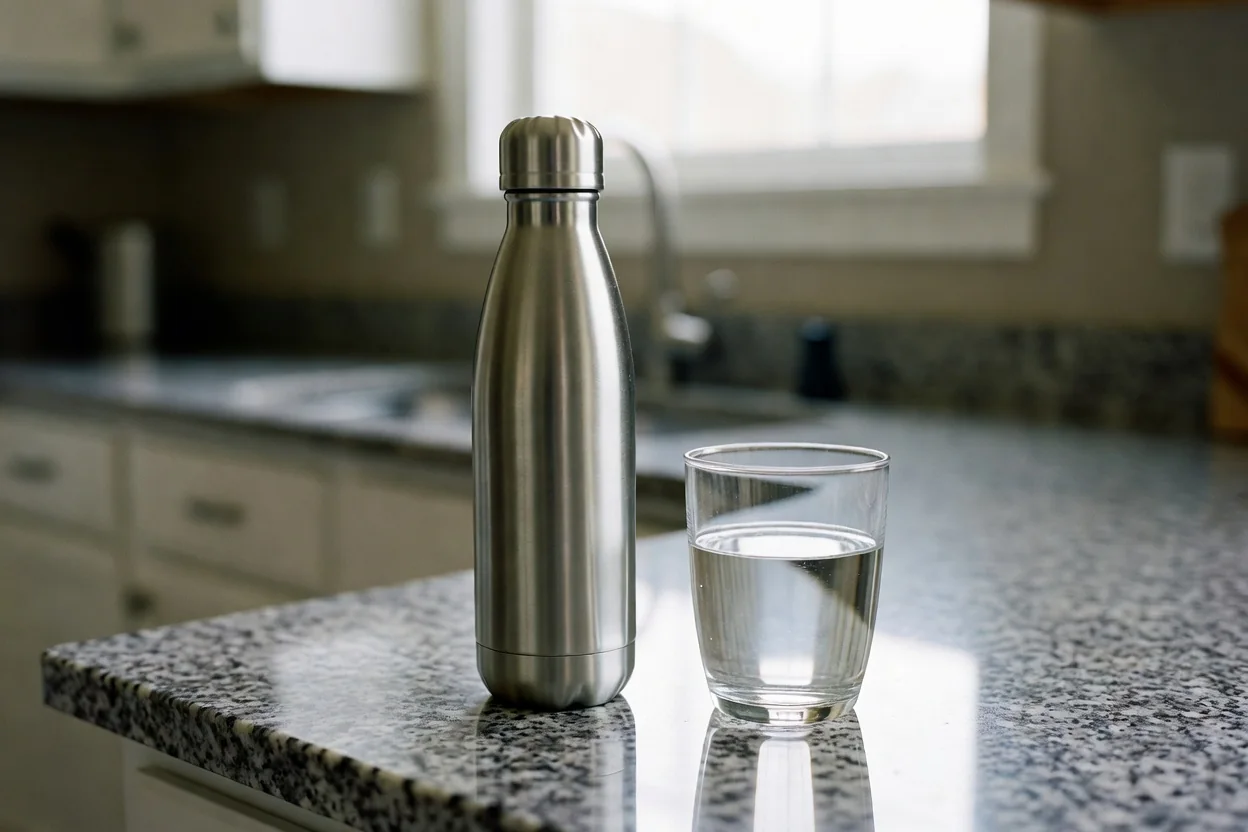
During: Matching Intake to Sweat
For sessions under an hour in moderate conditions, most people need little more than sips to comfort — the body carries enough reserve to cover the work. Beyond the hour mark, or in heat, or during heavy sweaters' workouts, drinking shifts from optional to strategic: small regular sips beat rare large gulps, which sit in the stomach and slosh.
Sweat rates vary enormously between people — some lose half a liter per hour, others well over a liter. A simple way to learn yours: weigh yourself before and after a typical session. Each kilogram lost is roughly a liter of sweat to replace over the following hours. Do this twice and you know your number better than any generic chart can tell you.
When Electrolytes Actually Matter
Sweat contains sodium and smaller amounts of other minerals, and this is the entire legitimate case for electrolyte drinks. In sessions under an hour, water alone covers almost everyone's needs — food replaces minerals at the next meal. Electrolytes earn their place when one or more of these apply:
- The session runs longer than about ninety minutes of continuous effort.
- You train in hot or humid conditions and sweat heavily.
- Your sweat leaves visible white salt marks on clothing — a sign of a salty sweater.
- You train twice in a day and must rehydrate fast between sessions.
Outside those cases, sweetened sports drinks mostly add sugar you did not plan for. And one caution in the other direction: drinking very large volumes of plain water during long events without any sodium can dilute blood sodium to dangerous levels — a rare but real risk of overcorrecting.
After: Rehydration Is Part of Recovery
The post-session window is where most people underperform. A useful target is replacing about one and a half times what you lost — because urination continues while you drink — spread across the next few hours rather than chugged at once. Pairing fluids with a normal meal covers electrolytes for all but the most extreme sessions, since ordinary food carries far more sodium than any drink.
| Phase | What to drink | Practical cue |
|---|---|---|
| Two hours before | Water, one to two glasses | Urine pale straw by session start |
| Under one hour of training | Water to comfort | Sips when thirsty, no schedule needed |
| Over ninety minutes or hot conditions | Water plus electrolytes | Regular small sips, salt tabs or a mix |
| First hours after | Water with a normal meal | Replace roughly 1.5 times the weight lost |
The Beginner Mistakes Worth Avoiding
Three patterns cause most hydration trouble. Training dry — arriving already behind and hoping to catch up mid-session — never works; absorption cannot outrun sweat. Copying elite endurance routines for a forty-five-minute gym session adds cost and sugar without benefit. And ignoring heat: the same workout in a hot room or summer afternoon can double fluid needs, which is why rigid rules fail where simple self-measurement succeeds.
A final practical note: the simplest hydration gauge is urine color across the day — pale straw means you are roughly on track, consistently dark means you are behind. Weighing yourself before and after a long session gives a personal sweat-rate estimate: every kilogram lost is roughly a liter to replace over the following hours, not all at once.
Build the day around plain water, time a glass or two before training, sip through anything long, and let the scale and the urine check — not marketing — tell you whether the system works. Hydration done right is invisible: you simply stop fading.