
Warm-Up Fundamentals: The 8 Minutes That Decide Your Workout
The warm-up is the most skipped eight minutes in sports. Beginners skip it because it feels like nothing is happening; experienced athletes skip it because yesterday went fine without it. Then a cold muscle meets a fast movement, and the next three weeks are spent learning about injury recovery instead of training.
A warm-up is not a ritual and not a stretch session. It is a specific preparation of the body's systems for the exact work ahead — and done right, it takes less time than choosing a playlist.
What a Warm-Up Is Actually For
Three things need to happen before hard effort. First, muscle temperature rises: warm muscle fibers contract faster and resist tearing better than cold ones. Second, joints get lubricated: the fluid inside them circulates when the joint moves through its range, which is why the first squat of the day feels rusty and the fifth does not. Third, the nervous system rehearses: the coordination pattern of the coming exercise gets switched on at low cost before it is asked to work at full cost.
Notice what is missing from that list: long static stretching. Holding stretches for half a minute or more before training temporarily reduces the muscle's ability to produce force — the opposite of preparation. Static stretching has its place, and that place is after the workout, not before.
The Universal Eight-Minute Sequence
A warm-up that works before almost any sport follows the same three-stage logic: raise, mobilize, rehearse. The order matters more than the specific exercises.
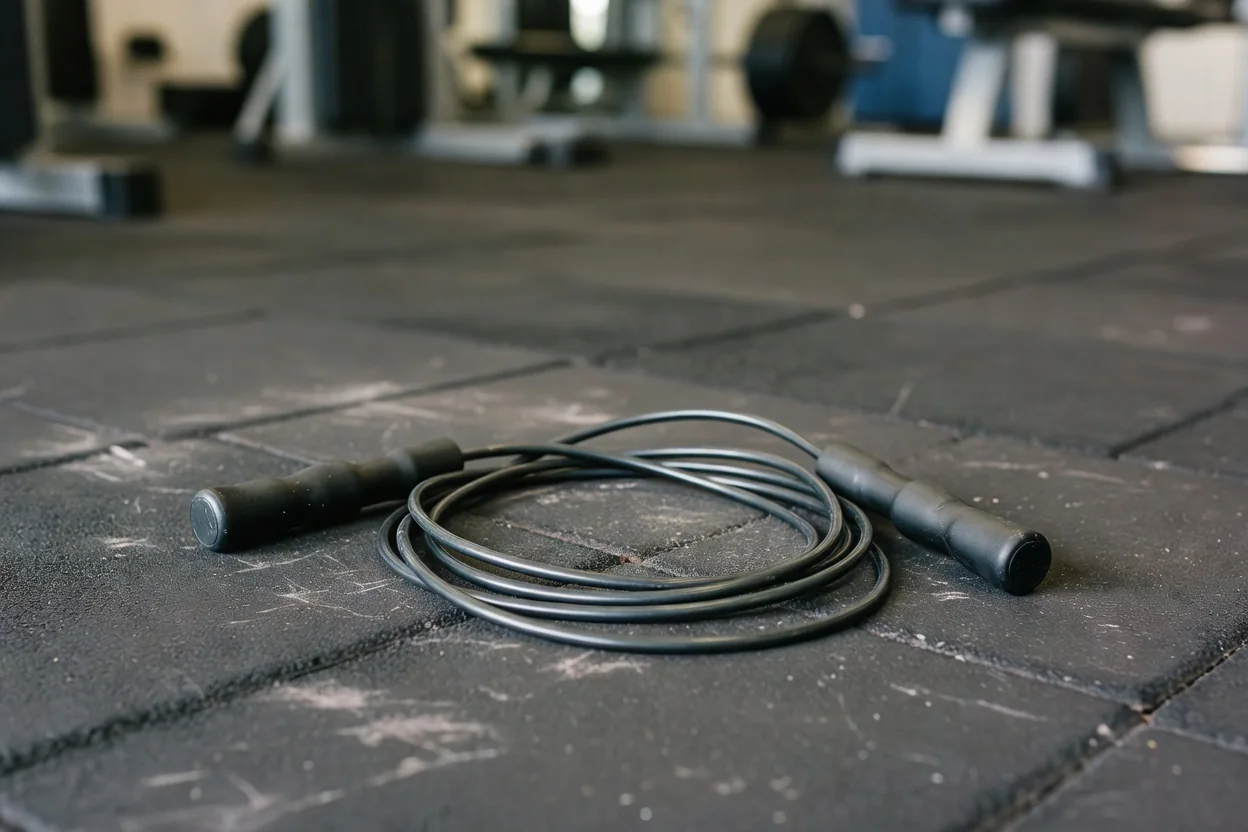
- Raise — two to three minutes of easy whole-body movement: marching or jogging on the spot, jumping jacks, or a few flights of stairs, until breathing is noticeably deeper.
- Mobilize — two to three minutes of dynamic joint work: arm circles, hip circles, leg swings front and side, torso rotations, ten of each, smooth and unforced.
- Rehearse — two to three minutes of the workout's own movements at low intensity: bodyweight squats before squats, easy shadow punches before boxing drills, a slow jog before a run.
That is the whole protocol. It scales in both directions: shorten it slightly for easy sessions, extend the rehearse stage for heavy or fast ones. What it should never do is disappear.
Matching the Warm-Up to the Sport
The raise and mobilize stages are nearly identical everywhere; the rehearse stage is where each sport demands its own logic. The principle is rehearsal at reduced cost — same movement, less load, less speed.
| Session type | Rehearse stage looks like | Extra attention to |
|---|---|---|
| Strength training | The first lift with an empty or very light weight, one or two sets | Shoulders and hips before upper-body work |
| Running | Five minutes of slow jogging or brisk walking into a jog | Calves and ankles, especially in cold weather |
| Team sports | Passing, light footwork drills, half-speed changes of direction | Groin and hamstrings before sprinting |
| Racket sports | Shadow swings, gentle rallies at short distance | Wrists, elbows, and trunk rotation |
| Home workout | The session's own exercises at half depth and half speed | Wrists before planks and push-ups |
Heavier and faster sessions deserve longer rehearsals. A heavy squat day might use four or five progressively heavier warm-up sets; an easy recovery jog needs almost none. Let the hardest minute of the session set the size of the warm-up, not the calendar.
Signs Your Warm-Up Worked — and Signs It Did Not
A good warm-up has a feel. The first work set should not feel like the first: if set two always feels dramatically better than set one, the warm-up was too short or too generic. Breathing should be elevated but controlled, muscles warm to the touch, and the target joints should move without stiffness or complaint.
Warning signs run the other way: joints that click painfully through the first repetitions, a heart rate that spikes and stays ragged, or movements that feel clumsy well into the session. Any of these means the preparation missed its target — usually the rehearse stage was skipped.
Mistakes That Cancel the Warm-Up
Three habits quietly undo good preparation. The first is the cold start in cold rooms or winter mornings, when eight minutes may need to become twelve; temperature is the literal point of stage one. The second is turning the warm-up into a workout — hard intervals or long stretching that create fatigue before the session begins. The third is sitting down: a warm-up followed by ten minutes on the phone on a bench is a warm-down.
Treat the transition as a funnel — from general movement to specific movement to the first real set, with no long pause at the end. Eight focused minutes, every session, is the cheapest performance upgrade and the most reliable injury insurance a beginner will ever buy.